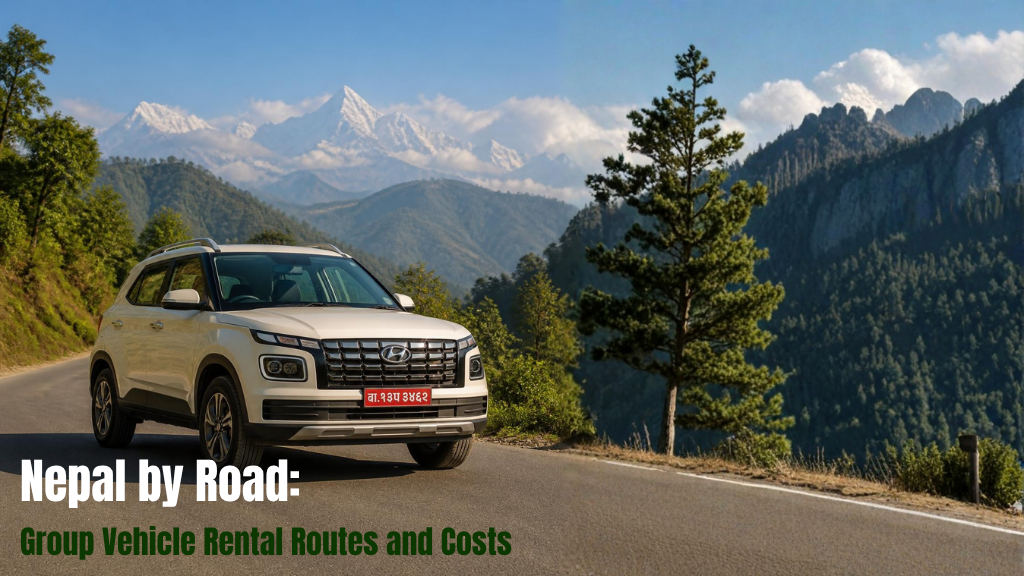
Nepal by Road: Group Vehicle Rental Routes and Costs
Every travel agency, boutique hotel, and tour operator in Nepal eventually faces the same question: how do we move a group of guests to the places they want to see, at a price we can present with confidence? Most of the conversation stops at Kathmandu to Pokhara, but the country's other corridors carry just as much demand - jungle safaris in Chitwan, the birthplace of the Buddha in Lumbini, the heritage towns of the Kathmandu Valley, and the gateway trails of the high Himalayas.
This guide breaks the most-booked group routes across Nepal into distance, drive time, the right vehicle, and a typical rental cost range, so you can quote itineraries quickly and accurately. Costs below are indicative planning figures for a full-day private hire with driver, fuel, and tolls included, excluding parking and meals. Actual numbers vary by season, group size, and pickup point, so treat them as baselines and confirm each itinerary with your rental partner before you commit to a client.
What drives the cost of a route
Before the routes, it helps to know why one corridor costs more than another. Three factors dominate every quote:
- Distance and terrain - longer drives and mountain passes push fuel use and driver hours up fast.
- Fleet type - a 4-seater sedan or EV costs far less to run than a 37-seat touring coach, and terrain decides what should be used at all.
- Season - peak travel seasons and festival periods tighten vehicle availability, which lifts rates and makes early booking essential.
When you book a single provider for the whole fleet rather than sourcing each vehicle separately, you also remove the overhead of managing multiple vendors, which keeps per-kilometre pricing predictable across every route on your calendar.
Popular routes and their typical cost ranges
The routes below are grouped from the short heritage loops near the capital out to the longer safari and pilgrimage corridors. The Kathmandu-Pokhara leg is intentionally left out to help you compare the alternatives travelers actually consider.
Kathmandu Valley heritage circuits (day trips)
The Valley routes are the bread and butter of the trade - short, reliable, and suited to almost any group size.
- Kathmandu to Bhaktapur - roughly 15 km and under an hour each way. The best option is a sedan, EV, or small Hiace for intimate groups doing the old town and pottery square. A standard day hire typically runs in the lower hundreds of rupees per vehicle; a half-day arrangement costs noticeably less.
- Kathmandu to Nagarkot - about 32 km and a 1.5-hour mountain climb. Sunrise-viewing demand makes this a favorite for boutique hotels. A sedan or Hiace suits most parties, with a half-day or sunset-day rate above the flat Valley fits.
- Kathmandu to Dhulikhel - under 40 km with sweeping valley panoramas and cooler air. Similar profile and pricing to Nagarkot, and easy to pair with Panauti for a full-day cultural loop.
- Kathmandu to Namobuddha - a heritage route past Boudhanath and toward the monastery at Namobuddha, often combined with Dhulikhel or Panauti as a day circuit. A Hiace or mini-bus works well for medium groups.
Jungle and pilgrimage corridors (multi-day)
These are the high-value itineraries where the commission and repeat-booking opportunities live.
- Kathmandu to Chitwan (Sauraha) - the safari gateway, about 150-170 km and a 5-6 hour drive. A comfortable Hiace or mini-bus suits most safari groups; larger parties step up to a coach. The longer distance and overnight option or early start push the rate meaningfully above a Valley day trip.
- Kathmandu to Narayanghat - a busier industrial junction on the way to Chitwan and central Terai. Often used as a transit or meeting point rather than an endpoint, with rates comparable to a Chitwan transfer.
- Kathmandu to Lumbini - the birthplace of the Buddha, roughly 280-300 km and a 7-8 hour drive. This is a full itinerary corridor best served by a spacious coach or multiple vans so groups arrive rested. Factor in driver rest and tolls; the rate reflects the distance, so budget accordingly and quote it as a two-day round trip where guests want time at the site.
High-Himalaya gateway routes
For groups heading toward the trails, vehicle choice becomes a safety factor more than a price one.
- Kathmandu to Jiri - the traditional Everest trek gateway, about 190 km of winding mountain road. Terrain demands a capable vehicle in good condition; sedans are not appropriate here, and a Hiace van or small coach with an experienced mountain driver is the standard choice. The rate is higher per kilometre for the driver expertise and heavier wear on the vehicle.
Picking the right fleet per route
Choosing the wrong vehicle either inflates cost or makes guests uncomfortable, so match the fleet to the corridor:
- Sedans and EVs (4-seaters) - best for short Valley loops, airport transfers, and intimate groups on the heritage circuits.
- Hiace vans and mini-buses - the workhorses of the trade: flexible for Chitwan safari groups, Lumbini parties, and medium-sized day trips.
- Touring coaches (up to 37 seats) - built for long hauls where large groups travel together, such as Kathmandu to Lumbini or full charioteer circuits.
A partner with a single, well-maintained fleet across these categories lets you scale a one-day trip to a 40-passenger itinerary without switching vendors or renegotiating mid-way.
How to quote and book confidently
- Ask for the fleet view, not a single price - a cost range for the route across sedan, van, and coach means you can match it to the group you actually have rather than selling a fixed vehicle.
- Lock in seasons early - during peak festival and trekking windows, availability drops and rates climb. Book the vehicle when the itinerary is confirmed, not the week before.
- Confirm what is included - clarify fuel, driver hours, tolls, parking, and driver lodging for overnight routes up front so the final quote you give guests is the final price they pay.
- Prefer transparent, local payment - working with a provider that accepts eSewa and Khalti, and that extends commissionable seller codes to trade partners, simplifies settlement and encourages repeat business.
Final thought
Nepal's road network rewards groups that plan the vehicle as carefully as the route. Whether it is a sunrise loop to Nagarkot, a safari transfer to Chitwan, or a pilgrimage drive to Lumbini, a clear route-by-route cost range lets you quote fast, book safely, and keep guests comfortable - without overpromising on price.
Ready to plan your next itinerary? Book Your Vehicle with a partner who can quote every valley, jungle, and mountain route under one roof.