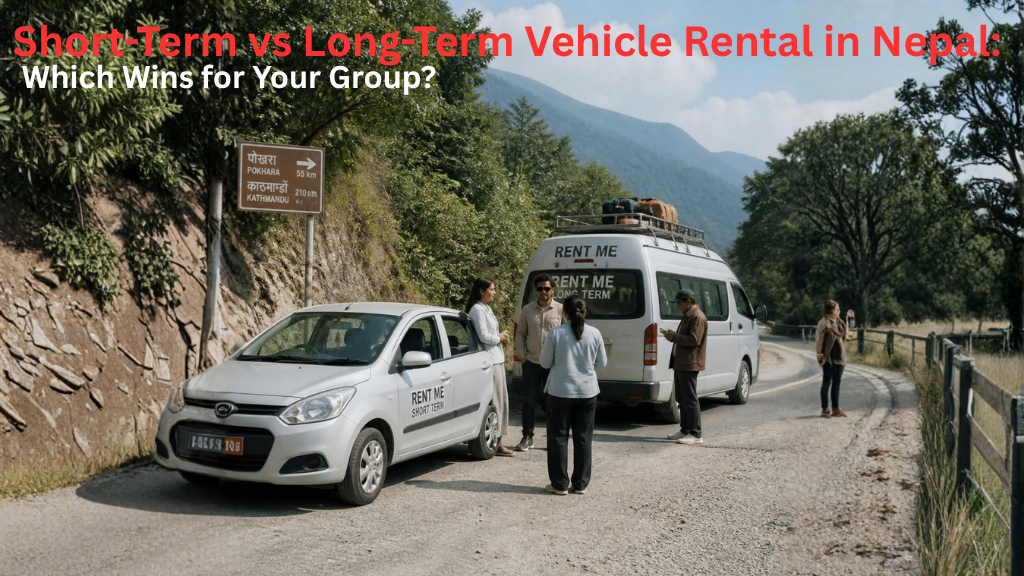
Short-Term vs Long-Term Vehicle Rental in Nepal: Which Wins for Your Group?
Every trade partner coordinating group transport in Nepal eventually faces the same scheduling question: do I book a vehicle for the days I need it, or lock one in for the whole stretch of the itinerary? The answer is not a matter of preference - it is a matter of matching rental duration to itinerary shape, group size, and how much flexibility your guests still expect.
This guide breaks the choice down the way a tour operator actually makes it: by cost per day, by fleet fit, by flexibility, and by the booking logistics behind each option.
Defining the Two Options
Short-term rental covers a single trip window - a day of sightseeing in Kathmandu, a two-day Kathmandu-Pokhara run, or a vehicle held for a peak-season weekend. You book what you need, when you need it.
Long-term rental covers an extended engagement - a multi-week overland itinerary, a full season of transfers for a hotel or agency, or a monthly contract for a vehicle that stays effectively dedicated to your operation.
Both are group vehicle rental arrangements. The difference is whether the vehicle returns to the fleet between jobs or stays in your rotation.
Head-to-Head: Short-Term vs Long-Term
| Factor | Short-Term | Long-Term |
|---|---|---|
| Best for | Day trips, one-off itineraries, seasonal spikes | Multi-week tours, recurring transfers, full seasons |
| Cost per day | Higher headline rate | Lower effective rate as duration grows |
| Flexibility | High - book only the days you use | Lower - commitment to a defined term |
| Fleet choice | Full fleet available per booking | Usually assigned a fixed vehicle class |
| Availability risk | Must confirm against peak-season demand | Secured for the term |
| Admin effort | One booking per trip | One contract, fewer confirmations |
| Ideal group size | Any, per trip | Consistent group sizes you already know |
When Short-Term Rental Wins
Short-term hire is the right call when demand is uneven. If you run a mix of two-seater couples and thirty-plus pilgrim groups, a per-trip booking lets you match the vehicle to each job: a sedan or EV for a small party, a Hiace van for a family group, a mini-bus or a touring coach up to 37 seats when the numbers climb.
It also protects you during peak season. When Kathmandu- and Pokhara-bound demand spikes, you are not paying for idle capacity on the quiet weeks in between. You book the busy days, release the rest, and keep your margins on the trips that actually generate revenue.
Choose short-term when:
- Your itinerary dates are irregular or still unconfirmed.
- Group sizes vary widely from trip to trip.
- You need a specific vehicle type for a specific route.
- You want to test a new route or product before committing.
When Long-Term Rental Wins
Long-term hire rewards predictability. When you already know your schedule - a weekly hotel shuttle, a fixed departure calendar, or a season of trekking transfers - committing to a vehicle for the term usually lowers your effective cost per day and removes the risk of being squeezed out of availability.
It also simplifies operations. One contract instead of a dozen bookings means fewer confirmations, fewer last-minute vehicle swaps, and a driver who learns your routes and your guests' expectations. For trade partners moving the same group sizes week after week, that consistency is worth more than the flexibility you give up.
Choose long-term when:
- Your departure calendar is fixed and confirmed.
- Group sizes stay broadly consistent.
- You need guaranteed availability through a busy stretch.
- You want a stable per-day cost to price your packages against.
The Cost Math That Actually Decides It
Duration should drive the decision, not brand loyalty to one model. Short-term rates carry a premium because the operator has to re-let the vehicle and absorb idle days. As your required duration lengthens, that premium dilutes - which is why a monthly contract is often cheaper per day than the same vehicle booked day by day.
The break-even point sits wherever your per-day premium from short-term bookings exceeds the value of the flexibility you keep. If half your bookings shift or cancel, short-term usually wins. If your calendar is locked and your vehicles are rarely idle, long-term usually wins.
Run the comparison on your own numbers: total contract cost divided by actual days used. Any day a long-term vehicle sits idle is a day you paid for and did not use - which is exactly what short-term hire avoids.
Fleet Fit: Match the Vehicle to the Term
Duration and fleet type are linked. Long-term commitments tend to favor the vehicles you use most: Hiace vans and mini-buses for recurring mid-size groups, or 4-seater sedans and EVs for continuous small-party transfers. Short-term bookings are where the full fleet earns its keep, because each trip can draw the exact class it needs - from a compact car to a touring coach.
If your long-term plan needs to flex between a 12-seat van and a 30-seat coach across the season, short-term or a hybrid arrangement will serve you better than a single fixed contract.
Booking Logistics, Payments, and Commissions
Whichever duration you choose, the operational basics should stay simple. Confirm availability against your dates before you commit, keep one point of contact for changes, and make sure your payment method fits how you actually transact in Nepal - local options such as eSewa and Khalti, alongside standard invoicing.
For agencies and hotels, commission structures matter as much as rates. Seller codes that track your bookings let you earn on the transport you arrange for guests, turning group transport from a cost line into a small revenue stream. That works whether you are booking a single sightseeing day or managing a full season of group transport in Kathmandu.
Day-of-trip visibility is the other piece worth demanding. GPS tracking on the day of the trip keeps your guests informed and your operations calm, which matters even more on long-term commitments where one vehicle is serving many departures.
A Quick Decision Checklist
Ask these five questions before you book:
- Is my departure calendar confirmed, or likely to shift?
- Do my group sizes stay consistent, or vary widely?
- Do I need a different vehicle class for different trips?
- Will the vehicle be busy most days of the term, or idle half of them?
- Does one contract or several bookings fit my admin capacity better?
If your answers point toward a fixed calendar, steady group sizes, and heavy daily use, go long-term. If they point to irregular dates, varying groups, and specific vehicle needs, go short-term.
The Bottom Line
There is no universally better option - only the better fit for your itinerary. Short-term vehicle rental in Nepal buys flexibility and exact fleet match at a higher per-day rate. Long-term rental buys a lower effective rate and guaranteed availability at the cost of commitment. Measure your real days of use against your real flexibility needs, and the right answer for your group becomes obvious.
Whatever you choose, book with a partner who can validate availability instantly, let you manage everything from desktop or mobile, and pay you back through transparent commissions. That is what makes group transport in Nepal as reliable as it should be.